Land Clearing Equipment Built for Hard Australian Terrain
The attachments we supply are the same ones running on jobs from Cape York to the Tassie high country. Picked for the conditions, not the brochure.
If you’ve tried running a mulcher built for European softwoods through a patch of ironbark, you already know why equipment choice matters on a land clearing job. Australian timber is dense, abrasive, and unforgiving on components that weren’t designed for it. At AR Equipment, we’ve spent thirty-plus years working with contractors clearing land full of scrub, knocking back regrowth, and opening up sites for construction, and we’ve built our range around what actually holds up.
This page covers the land clearing attachments we stock for excavators and skid steers, with honest pricing, weight-class fit, and where each one earns its keep. If you’re not sure which tool suits the job, give us a call on 1300 441 121, and we’ll work it out with you.
The AR Equipment Land Clearing Equipment Range
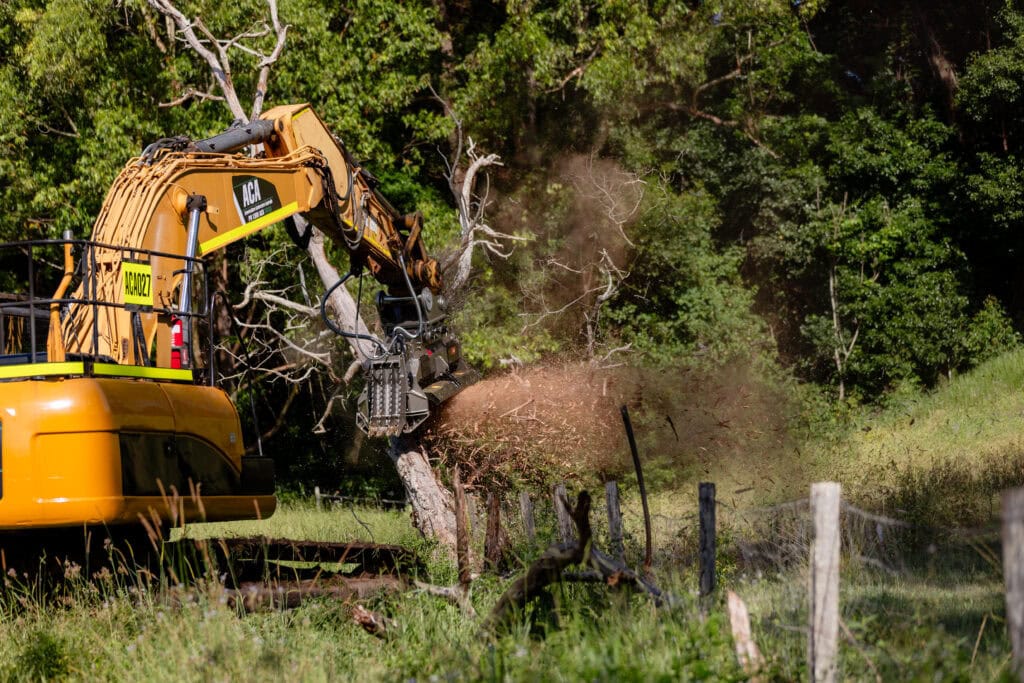
From $19,990 ex-GST. Built for 5 to 35 tonne machines.
The forestry mulcher is the heavy-hitter in any serious land clearing equipment kit. Ours is engineered for hard Australian timber, with a Hydro Leduc bent-axis piston motor that delivers full torque under load, not the variable output you get from swash plate designs that back off when the work gets hard.
Where it earns its place: dense scrub, standing timber up to 350mm, forestry thinning, fire break creation, and bulk vegetation work where a slasher or mower can’t cope. Models from 8 tonne and up come with a hydraulic debris door for controlled clearing near fences, buildings, or infrastructure.
Every unit ships with head brackets matched to your machine, hydraulic hoses, and a thumb. No add-ons, no surprises.
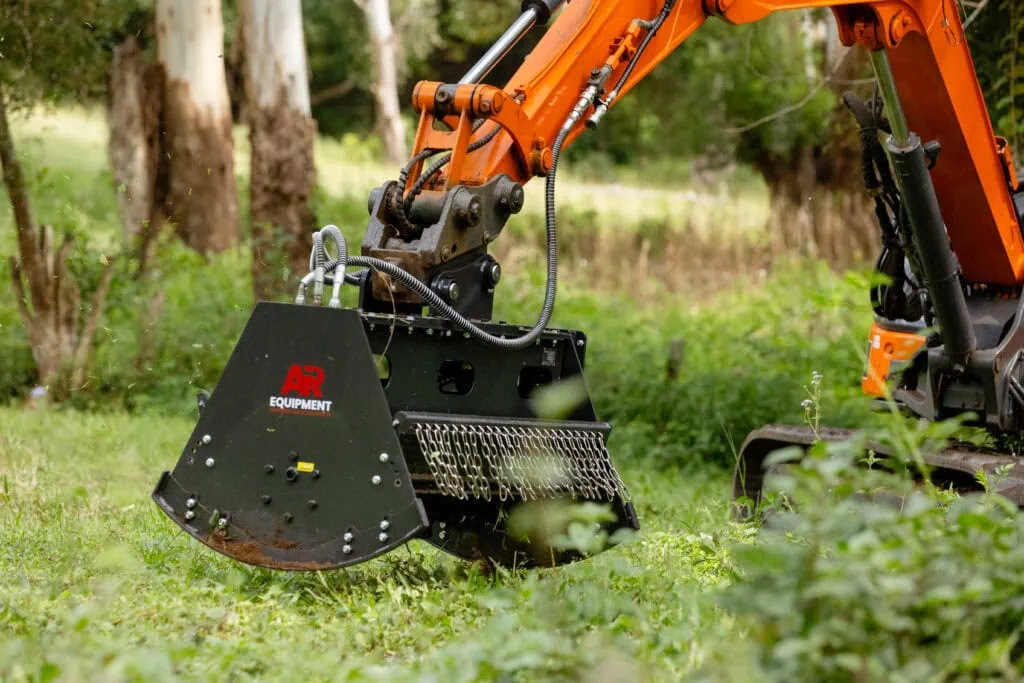
Mid-weight vegetation management for 2 to 20 tonne machines.
When the job is dense grass, light scrub, blackberry, lantana, or regrowth up to around 80mm, a flail mower is the right call. It’s lighter and faster than a mulcher, cheaper to run, and gets into work a mulcher would be overkill for. A good fit for roadside, fenceline, and property maintenance work where you’re keeping vegetation down, not clearing it out.
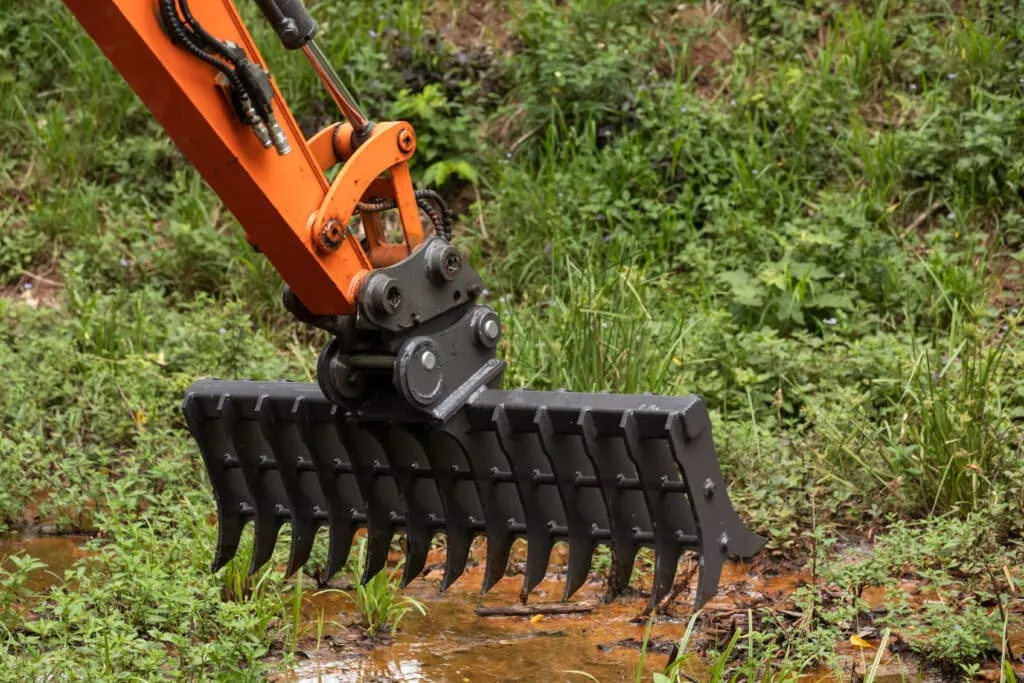
Root removal and debris clearing for 5 to 25 tonne machines.
Once the scrub is down, a stick rake handles the follow-up. Perfect for pulling roots, windrowing felled timber, stacking debris for burning, and clearing stumps without carting fill off-site with them. Most contractors running mulchers end up with a stick rake sitting on the float, too, because the two tools do different jobs well.
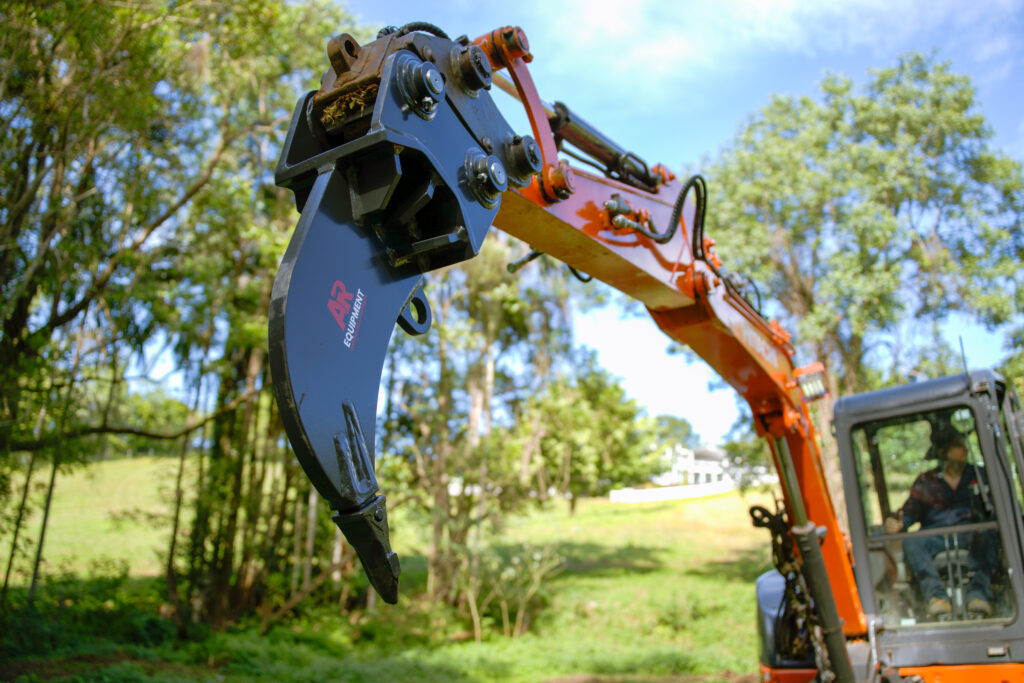
For compacted soil, root systems, and stubborn ground.
Rippers come in when the job is below the surface. This heavy-duty machinery breaks up compacted ground before clearing land, tearing out stubborn root systems, or prepping hard soil for deeper projects. Straight-shank and multi-shank options are available depending on the machine size and ground conditions. A useful second tool, alongside a mulcher or stick rake, when land has both surface vegetation and root mass to deal with.
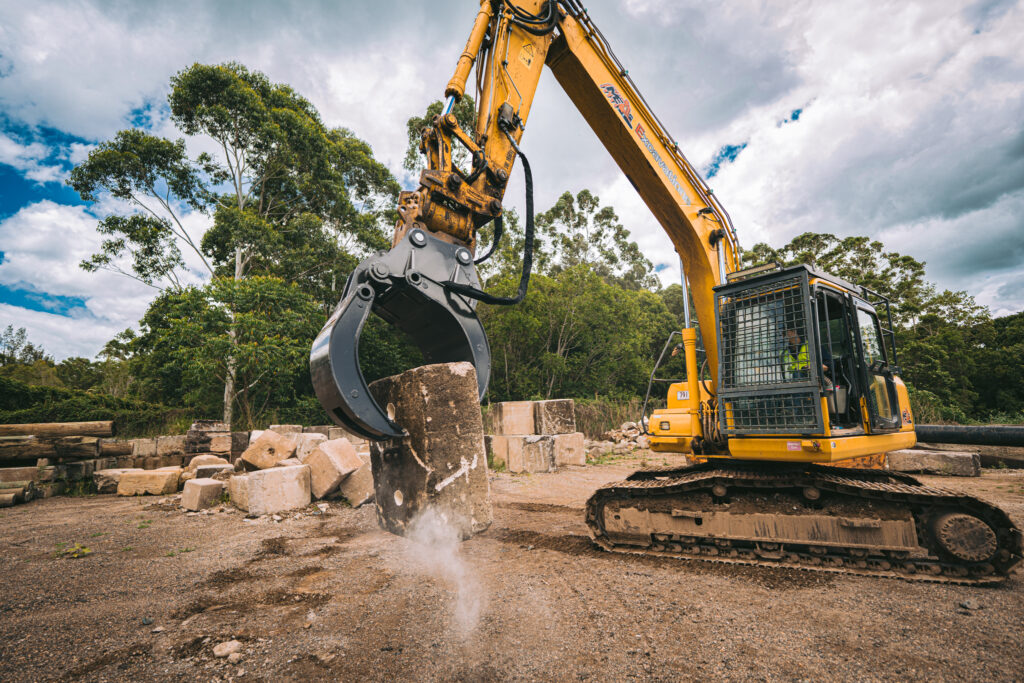
Log and brush handling for any clearing job.
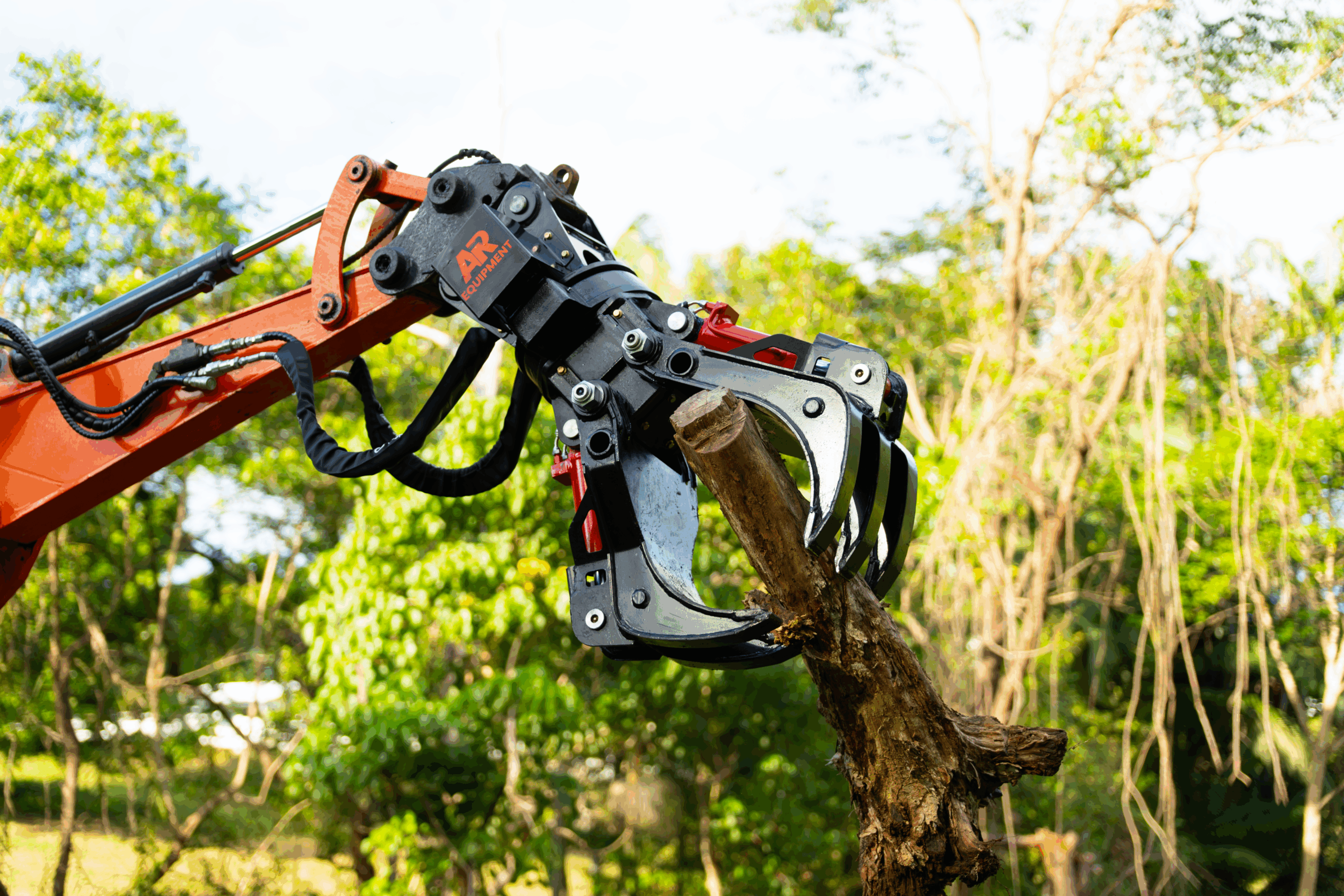
Once timber is down, you’ve got to move it. Our excavator grabs, including rotating and demolition variants, handle logs, brush piles, and cleared debris. Useful for loading trucks, stacking for chipping, or positioning larger timber for milling. Rotating grabs give you the control you need in tight spots around fences, buildings, or other trees you don’t want to drop.

For processing cleared timber on site.
If you’re clearing for firewood or splitting timber that’s too large to move whole, a log splitter attachment runs off your excavator’s hydraulics and turns downtime on a machine you already own into productive work. Simple equipment saves hiring a dedicated splitter.
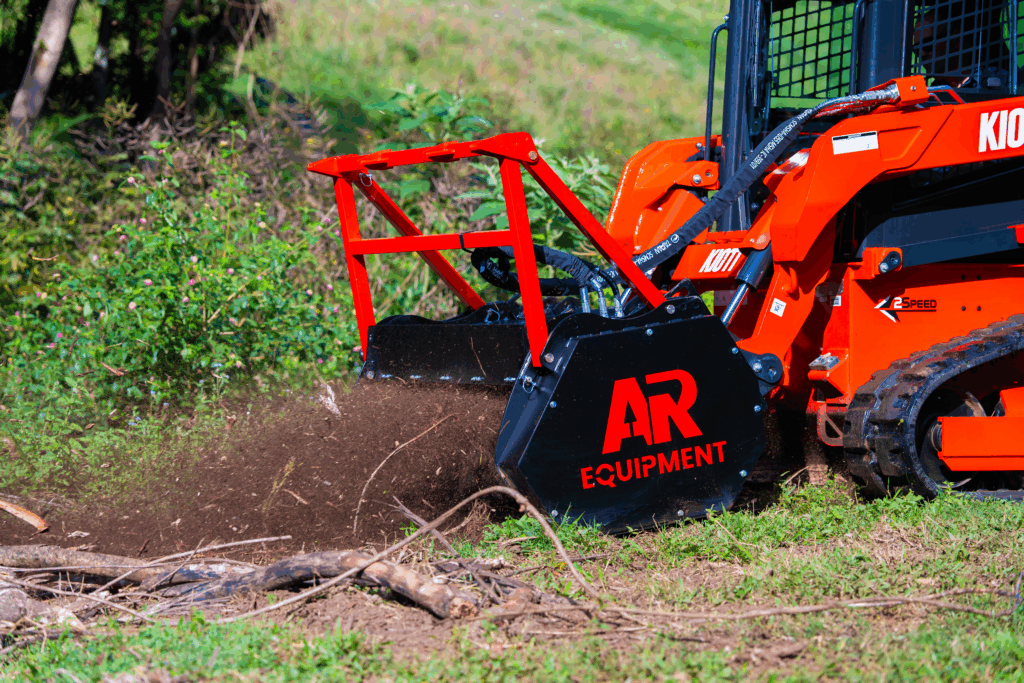
For smaller sites, tighter access, and properties.
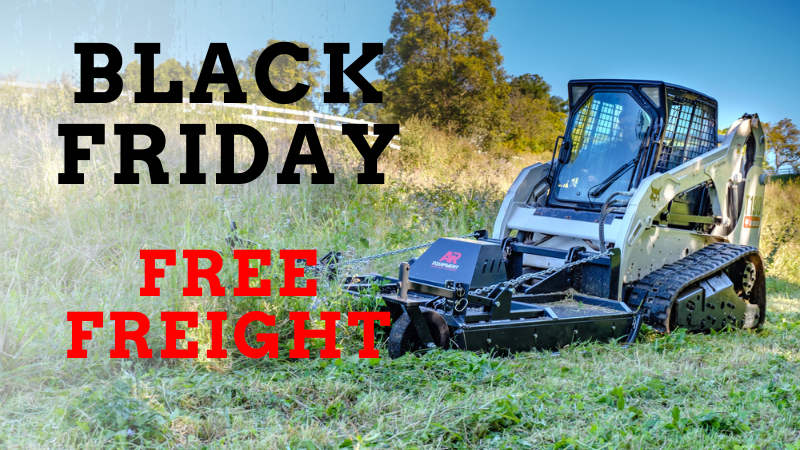
Not every job needs a 20-tonne excavator. For smaller acreage work, tight access sites, and property maintenance, a skid steer mulcher or hi-torque slasher often makes more sense. Same principle as the excavator attachments, just sized for the carrier. We stock both for the most common skid steer brands.
Picking the Right Tool for the Job
A few honest questions worth asking before you commit to an attachment:
- What’s the vegetation? Soft regrowth and grass are slasher or flail territory. Dense scrub and standing timber mean a mulcher. Roots and cleanup means stick rake and ripper.
- What’s the machine? Oil flow and pressure have to match the attachment. We’ll check this for you before you buy.
- What’s the follow-up work? If the site needs to be ready for construction, you’ll likely need more than one tool across the job.
- Is it a one-off or ongoing? For ongoing work, buying pays for itself fast against the cost of hire, and finance is available to spread the outlay.
If you’re not sure, ring us. Thirty years between the team means we’ve seen most combinations, and we’ll tell you straight if an attachment isn’t the right fit.
Why Contractors Choose AR Equipment
- Engineered for Australian timber. Bent-axis motors, bite-limiting rotors, and components picked for hard ground, not mild European conditions.
- Largest in-stock range in Australia. Over 500 attachments are held in stock for fast dispatch.
- Parts and service are held locally. Fully equipped Australian workshop. When something needs attention, it doesn’t get shipped overseas.
- Finance available. Up to $250,000 with four-year terms, subject to approval.
- OEM supplier. We supply major manufacturers, including Kubota, Cat, Hitachi, Bobcat, Volvo, JCB, and ASV, which tells you something about the build quality.
Ready to Clear?
Our team is across every attachment in the range, and we’ll help you pick what actually suits your machine and your job, not whatever we’ve got most of in the warehouse.
Contact us now:
Phone: 1300 441 121
Online Quote: Complete our quick quote form
Browse our complete range online
Frequently Asked Questions
What's the difference between a forestry mulcher and a flail mower?
A mulcher is for dense scrub, standing timber, and harder vegetation up to around 350mm. A flail mower suits grass, light regrowth, and woody material up to roughly 80mm. Mulchers cost more to run and need more oil flow, but they handle work that a flail mower physically can’t. If you’re across a mix of both types of work, most contractors end up with one of each.
Will these attachments fit my excavator?
Oil flow, pressure, and weight class all matter. We check compatibility before quoting, so send through your machine make and model, and we’ll confirm the right fit. Head brackets matched to your machine are included in the price on mulchers and most other attachments.
Do you offer finance on land clearing attachments?
Yes, up to $250,000 with four-year terms, subject to approval and credit assessment. There’s a repayment calculator on each product page so you can get a ballpark before you contact us.
Can I get parts and service in Australia?
Yes. Spare parts are held locally, and our in-house workshop handles service and repairs. We don’t ship broken attachments overseas and hope for the best.
Is it worth buying rather than hiring for a one-off job?
Depends on the job length and the attachment. For a short single-job clear, hire rates can add up fast, especially on higher-spec mulchers. With finance available up to $250,000, buying often works out better once you run the numbers. Happy to help you work it out before you decide either way.
What weight-class excavator do I need for land clearing work?
Depends on the scale. For property maintenance and light clearing, a 5 to 8 tonne machine with a flail mower or small mulcher handles most work. For commercial forestry mulching, 12 tonnes and up is standard. For large-scale clearing, 20 to 35 tonnes is where the serious production work gets done.